


























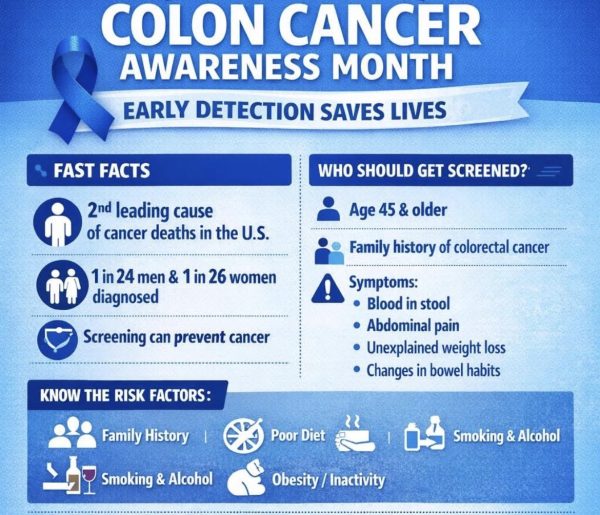
March is National Colorectal Cancer Awareness Month, dedicated to raising awareness about prevention and treatment. This cancer is one of the most common and deadliest in adults under 50. About 150,000 Americans are expected to be diagnosed with colorectal cancer annually, and about 9,000 to 16,000 cases are expected in Mexico annually. But, behind every statistic is a family member, a friend, a real person.
About nine months ago, my Tia was diagnosed with colorectal cancer, the third most common cancer and a leading cause of mortality for men and women in Mexico. My aunt was so much more than her diagnosis. She was a mother, a daughter, an aunt, my godmother, and a soon-to-be grandmother. Despite her disease, she continued to be one of the toughest women I know and one of the most beautiful women, on the outside and inside. Her hair was always done along with her makeup; her beauty never faded, nor did her love.
Cancer diagnoses, specifically CRC, can be challenging to identify due to limited screening programs and a lack of healthcare in Mexico. As a result, up to 80% of cases are diagnosed in advanced stages. Rates in Latin America pose a substantial public health concern as data and registries for CRC in Mexico remain scarce and outdated (ecancer). Only about 78% of people have access to healthcare in Mexico, compared to 92% in the United States.
In 2026, the American Cancer Society said that “colorectal cancer death rates in the past decade have decreased by 1.5%.” However, in developing countries, the potential impact of cancer in future years may have devastating consequences (PubMed Central). Because of this, there is an emphasis on the importance of early screenings for people over 50 in reducing mortality.
It is critical that people receive early screenings and detect symptoms early. Symptoms include, but aren’t limited to, persistent abdominal pain, changes in bowel movements, and unexplained weight loss. These symptoms could also be caused by conditions other than cancer, such as hemorrhoids or infections. However, persistent symptoms should be evaluated by a professional. Each country must enact public policies to strengthen the measurement of cancer in different stages.
This March, make a priority to help raise awareness about colorectal cancer. March plays a crucial role by increasing screening rates, education about prevention, and reducing the stigma for the second deadliest cancer. Together, we can change the future for colorectal cancer patients. Get educated today and learn how you can help this March.



Josefina Garcia • Mar 20, 2026 at 9:47 am
Thank you for the information. We really need to know more about it.