












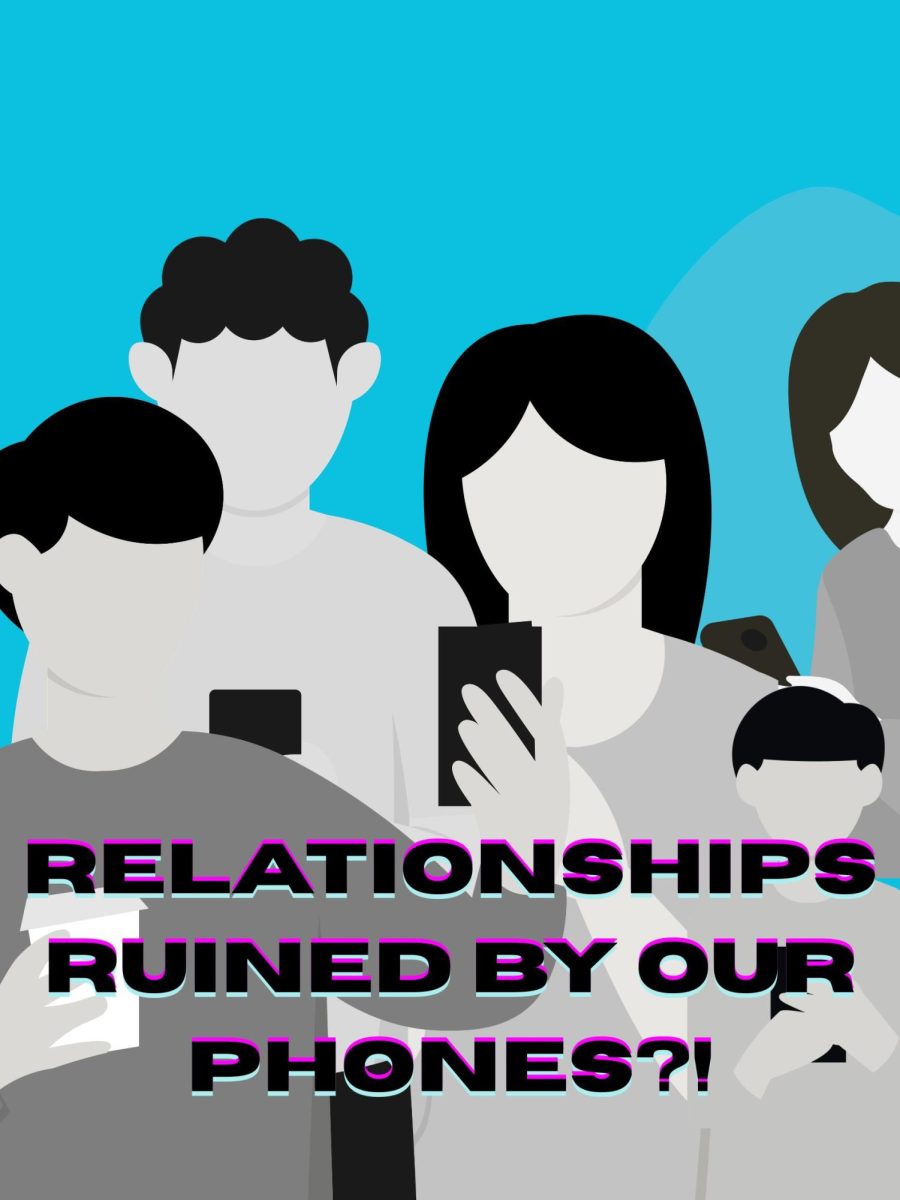













When I look around in our school cafeteria, all I see is a bunch of teenagers staring at their phones. Most of them are completely silent at their lunch table, surrounded by friends. Now I wonder, is this harmful to us? We don’t talk to one another to entertain ourselves; we use the phone to entertain ourselves. We are avoiding life by letting our phones suck us into a virtual world.
When I come home from school, my dad is glued to his YouTube videos on his iPad, and my mom is on Facebook reels scrolling her day away. We are far from being in the present moment. We are too busy watching everyone else’s lives and not enjoying ours. Now think about your life, when was the last time you had a family dinner when you didn’t even glance at your phone once? We are dividing ourselves from the people who should bring us support and memories. Life is long; we just make it seem short. The next time you think, “I’m too busy to play board games,” check your screentime. If it is anytime over 3+ hours, you have plenty of time to spend time with your loved ones. When you are scrolling or playing games on your phone, you could be having the best time sharing stories and memories.
Communication is what keeps relationships alive. I’ve noticed that when I talk to my friends or other students my age, usually, you will see them glancing back and forth at their phone or maybe even pick it up. In the worst-case scenario, they are digging their face into their phone, basically ignoring you. Research shows that more people who use or have a phone around while having a conversation, they are less empathetic. A term called Phubbing, which describes people who use their phone while having a conversation, is the culprit. It is serious and can have negative effects on your cognitive functions, your well-being, and your social relationships.
Healthy communication starts with body language. When learning about presenting in school, did they teach you about body language? My teachers talk about body language before we present a project to the audience and presenter. Eye contact is the main key; you don’t have to stare them down into their soul, but looking in their vicinity is respectful, especially when you are a listener. We are distracted by our phones, hence the entire reason we have a no-phone policy at MHS. If our phones keep ringing or popping up with notifications, we will automatically look at them instead of engaging in the conversation. Many adults I’ve spoken with agree that it is disrespectful to check your phone or scroll on your phone while having a conversation. The next time you look at your phone in a conversation, think about how the other person may feel.
(counseling.northwestern.edu) (sciencedirect.com)
When you are having a conversation with someone, notice what your body language is saying about your engagement in the conversation. If you catch yourself looking at your phone often, ask yourself why. What are you expecting? Are you waiting for something? If it isn’t important, you shouldn’t be looking at your phone. If you find yourself sucked into the virtual void, ask yourself what you are avoiding. Do you feel lonely? Do you feel sad? When was the last time you spent time with your family or friends? If you haven’t spent time with your loved ones in a while, go hang out! Get off your phones and spend quality time!