


























Hey Muskies, it’s Yarely back at it again… with another “what is this holiday actually about?” investigation.
After the Valentine’s Day article, it was suggested that I look into St. Patrick’s Day next. So here we are. But this time, I had a little research help from my friend Bailey, who helped dive into the history side of things.
So let’s talk about St. Patrick’s Day. Because honestly… What is going on here?
Why are we wearing green?
What’s up with people pinching each other?
And why does this holiday somehow turn into an excuse for people to drink green beverages like it’s a competitive sport?
Seriously, what if green isn’t my color? Let’s rewind a little and talk about the actual person behind the holiday.
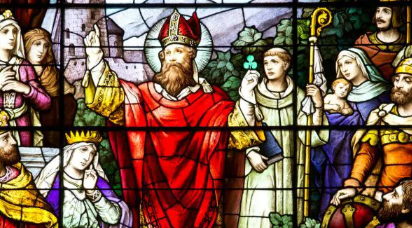
The Real St. Patrick
Believe it or not, St. Patrick wasn’t even Irish.
He was born in Roman Britain sometime around the late 300s A.D. When he was about 16 years old, he was abducted by Irish raiders and taken to Ireland as a slave.
For six years, he worked there as a shepherd. During that time, he later wrote that he began to pray constantly and grow stronger in his Christian faith.
Eventually, he escaped and made it back home, but here’s the surprising part: years later, he chose to go back to Ireland.
This time, he returned as a Christian missionary to preach the Gospel. Over time he became known for helping establish churches and monasteries and sharing Christianity throughout Ireland.
According to tradition, Patrick died on March 17th, A.D. 461.
Because of his influence, he eventually came to be honored as a saint, and March 17 became associated with remembering his life.
How the celebration started
Originally, St. Patrick’s Day wasn’t about parades or parties.
It became a Roman Catholic feast day, where people attended church services and celebrated the life of Patrick. In Ireland, it was historically a religious observance, and many businesses were even closed for the day.
The Irish began marking the day sometime around the 9th or 10th century, though it wasn’t officially recognized as a public holiday in Ireland until 1903.
So originally, the day was meant to remember a missionary and a moment in Irish Christian history.
Then… things OBVIOUSLY got twisted.
Fast-forward a few centuries and somehow the holiday turned into:
– wearing green from head to toe
– pinching people who aren’t wearing green
– giant parades
– shamrocks everywhere
– and for many adults… lots and lots of drinking and beer bellies
At some point the focus shifted from history to spectacle. Now, it often feels less like remembering a historical figure and more like a green-themed festival of consumerism. Stores sell decorations, restaurants push themed drinks, people buy hats, shirts, and accessories they will probably only wear once a year.
Suddenly, a historical figure becomes an excuse for marketing campaigns and party culture.
A personal note from me (Yarely)
As a Christian, I personally don’t celebrate St. Patrick’s Day. That’s just my choice. I’m not writing this to judge anyone who does.
But I do think it’s worth asking: what are we actually celebrating? Pinching people and drinking green beverages doesn’t really honor the life of a missionary who spent years preaching about faith.
And more broadly, it feels like many holidays today turn into the same thing:
Buy more things.
Post the pictures.
Move on to the next holiday.
Maybe there’s a better way
If someone wants to celebrate St. Patrick’s Day, maybe the best way isn’t the loudest parade or the most decorations.
Maybe it’s simply learning history. Understanding that behind the green hats and shamrocks was a real person who experienced hardship, slavery, faith, and mission.
Maybe, just maybe, we don’t need every holiday to turn into another reason to spend money and fill shopping carts. Sometimes remembering the story is enough.
And… if you still want to wear green, go for it.
Just don’t pinch me if I forget.
– Opinion Editor Yarely, with the help of Staff Writer Bailey.